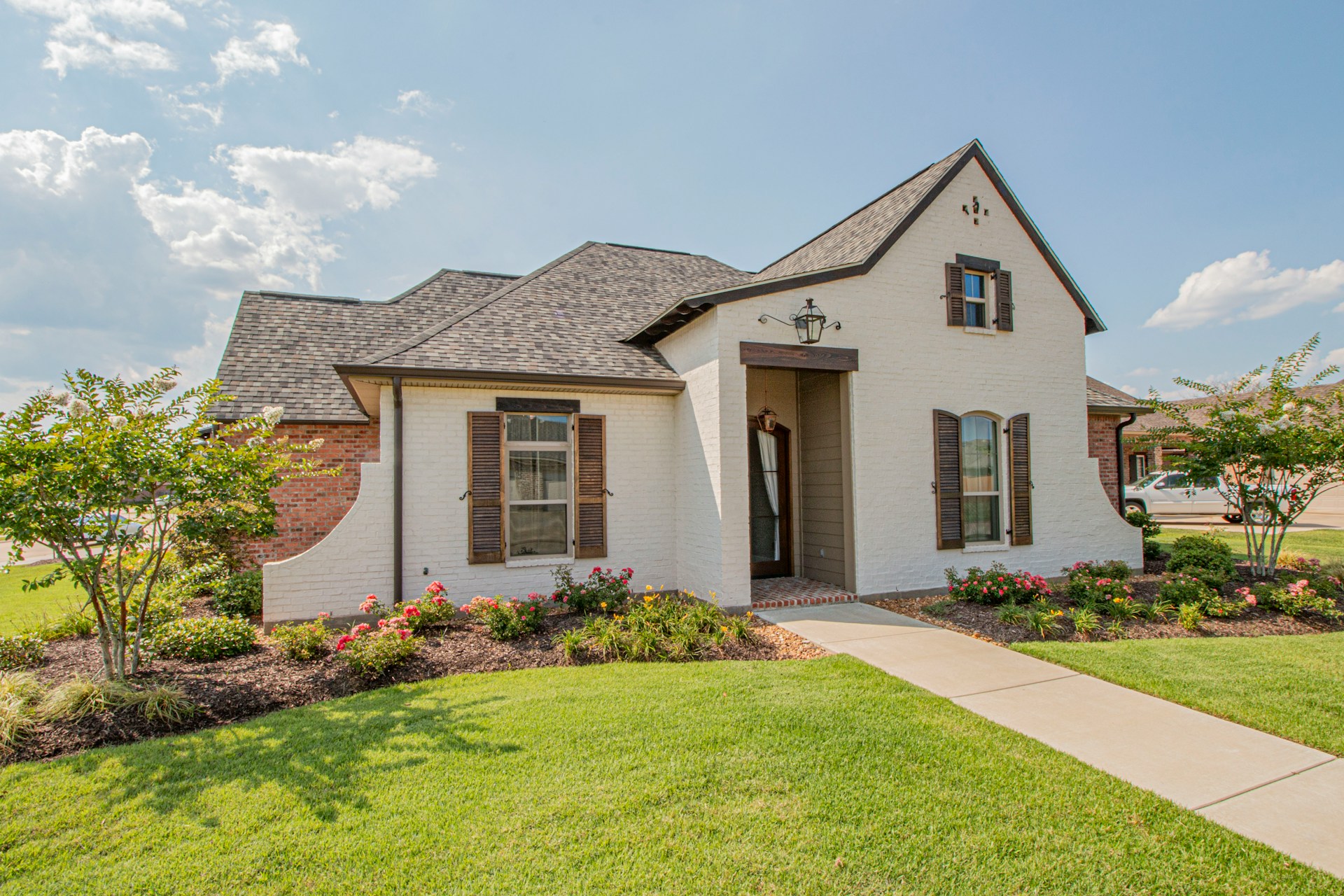
House hacking is the most realistic way for a lot of people to get into real estate in Orange County. You buy a property with a few units (or a home with a separate unit), live in one, and rent the rest. The rent from your tenants helps carry the mortgage, and because you live there, you get owner-occupied financing instead of investor financing. That means smaller down payments and better terms than a pure rental would get.
That's the pitch. Here's the honest version: house hacking in Orange County works, but the numbers are tighter than the internet makes them sound, and the loan rules change a lot depending on how many units you buy and how big your loan is. I'm Rob Tennyson, a Loan Advisor with C2 Financial, and this is how I walk OC buyers through it.
There are three common setups here:
Which setup you choose matters more than most buyers realize, because each one runs into a different set of loan rules.
Orange County is a high-cost county, so it sits at the top of the federal loan-limit range. For 2026, the limits that matter for house hackers are:
FHFA and HUD normally announce the next year's limits late in the year. Until the 2027 numbers are official, the 2026 figures above are what lenders use.
The key point is that most OC duplexes and fourplexes need a loan above the standard conforming baseline. That pushes you into "high-balance" territory, and on the conventional side high-balance comes with different down payment rules.
FHA is the go-to house hacking loan for good reason. It allows as little as 3.5% down on a 1-4 unit property you'll live in, and the OC limits above go high enough to cover most small multi-family buildings in the county.
What to know before you lean on it:
For a triplex or fourplex, FHA requires that the property can roughly carry itself. The rule: 75% of the appraiser's estimated rent from all units, including the one you'll live in, has to be equal to or greater than the full monthly housing payment. That payment includes principal, interest, property taxes, homeowners insurance, mortgage insurance, and any HOA dues.
Here's a simple illustration with made-up round numbers. Say a fourplex appraises with market rent of $2,600 per unit. That's $10,400 a month in total rent, and 75% of that is $7,800. To pass, the full monthly payment has to be $7,800 or less. In much of Orange County, fourplex prices are high enough that a 3.5%-down FHA payment can blow past that number, which means the deal fails the test even though the buyer's own income is strong.
Two things help: a larger down payment (which lowers the payment), or a building with rents that are strong relative to its price. This test does not apply to duplexes, which is one reason duplexes are often the cleaner FHA house hack in OC.
Since late 2023, Fannie Mae has allowed as little as 5% down on owner-occupied 2-4 unit properties. That was a big change, since conventional multi-unit purchases used to need 15-25% down.
The catch in Orange County is loan size. Under Fannie Mae's current eligibility rules, the 5%-down option applies to standard conforming loan amounts. Once your loan crosses into high-balance territory, the maximum loan-to-value drops to 85% on a duplex (15% down) and 75% on a triplex or fourplex (25% down).
In plain English: if you're buying an OC duplex and your loan stays at or under $1,066,250, 5% down may be possible. If the loan is bigger than that, plan on 15% down for a conventional loan, or look at FHA instead.
Why would anyone pick conventional over FHA, then? A few reasons:
This is where a lot of OC house hackers end up, because there are far more single-family homes than small apartment buildings in the county, and many already have a permitted ADU or a garage that can be converted.
Both major loan types can now give you credit for ADU rent:
One important detail: the ADU needs to be legal and permitted. An unpermitted garage conversion usually can't be counted as income, and it can cause appraisal problems. Check permits before you fall in love with the house. If you're thinking about building one after you buy, we covered that in our guide to financing an ADU in Orange County.
Renting bedrooms is the easiest house hack to set up and can make a big dent in your housing cost. But on most standard loans, rent from roommates in a one-unit home is very hard to use for qualifying, especially on day one with no rental history. Plan to qualify on your own income, and treat roommate rent as a bonus that helps your monthly budget after closing.
House hacking is still one of the smartest ways to buy your first property in Orange County, but it's a math problem first and a real estate problem second. FHA gets you in with the least cash but comes with mortgage insurance and the self-sufficiency test on 3-4 units. Conventional can be cheaper long-term but often needs 15-25% down once your loan goes high-balance. And a single-family home with a legal ADU is often the most practical path in this market.
Every loan is subject to credit and property approval, and program rules and limits can change. The right answer depends on your income, credit, cash, and the specific property.
If you're thinking about house hacking in Orange County, let's run your numbers before you start touring. I'll show you the loan options side by side so you know your price range, your down payment, and whether the rents will actually pencil.
Call or text Rob Tennyson at (714) 400-2317 or email rob@robyourlender.com to get pre-approved.